
TREE PRUNING
Tree Pruning in San Andreas, CA
Pruning is the selective removal of branches to improve a tree's structure, cut back deadwood and support its long-term health. Done well, it leaves a tree stronger and better balanced, not just tidier.
Our crew removes dead, damaged and crossing branches first, then addresses weak or competing limbs that could fail later. Each cut is planned around how your specific tree grows. Timing depends on the species and the season, so we confirm the right window with you during your free estimate.
If you are looking for clearance or overgrowth work rather than structural cuts, see our tree trimming page. Questions about your property? Call Three Pines Tree Service LLC at (209) 335-6655.
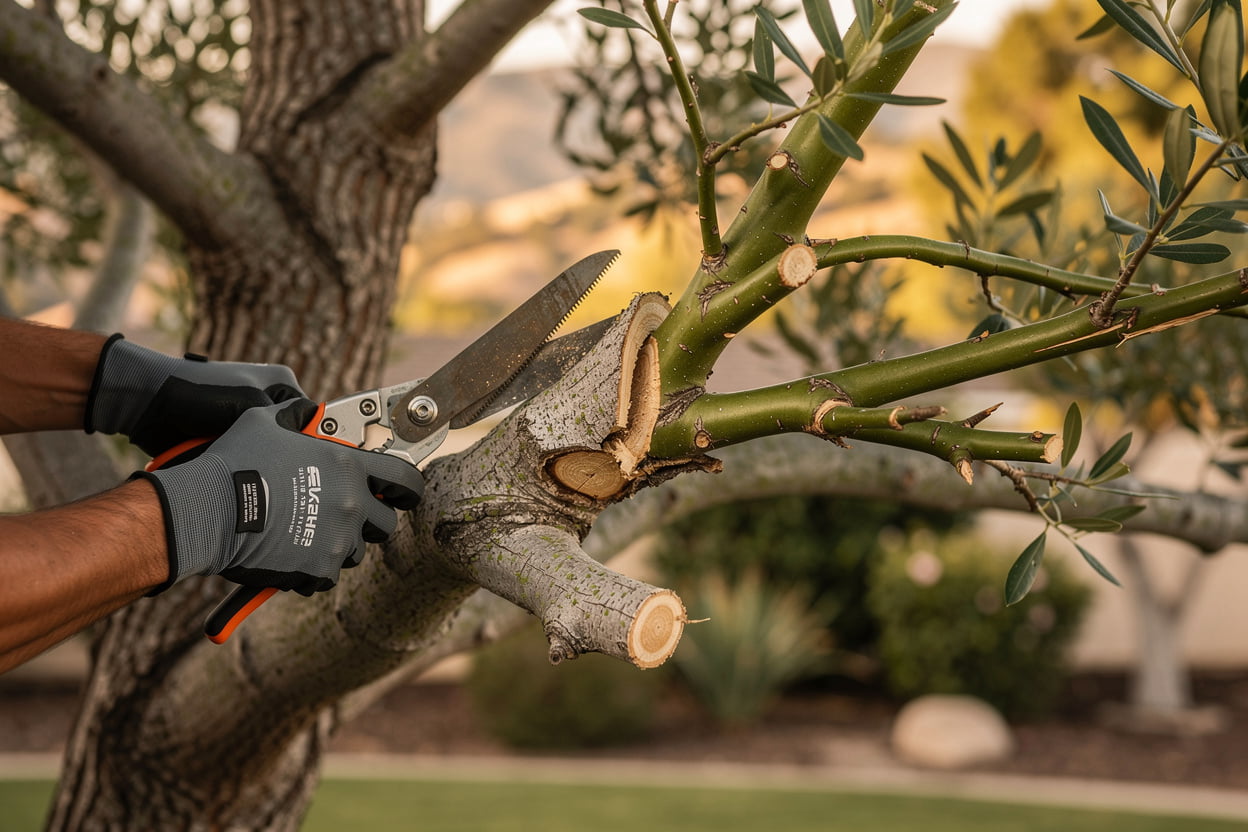
Pruning Versus Trimming: Which One Do You Need?
Homeowners often use these two words interchangeably, but the work and the goal differ. Trimming keeps a tree or palm clear and tidy. Pruning shapes how a tree grows and keeps it healthy over time. Knowing which one fits your tree helps you request the right estimate from Three Pines Tree Service LLC.
- Trimming covers clearance and overgrowth: branches touching a roof, blocking a walkway, or crowding the canopy.
- Pruning covers structure and health: selective cuts that remove deadwood, crossing limbs, and weak growth.
- If your goal is looks or room to move around the house, trimming usually fits. If the tree looks unbalanced or unhealthy, pruning is often the better choice.
When to Prune a Tree
Timing matters as much as the cut itself. Pruning at the wrong point in a tree's life or season can stress it, so we work through the same order on every property: dead wood first, structure second, and species and season last. Your crew will confirm the timing on site before anything is scheduled.
-
1
Remove dead and damaged wood first
Dead, broken, or diseased branches come out before anything else. They pose the most risk to people and property, and removing them never harms the healthy growth around them.
-
2
Address structural issues next
Crossing branches, weak unions, and lopsided growth are corrected while the tree is still young enough to respond well. Structural pruning is usually planned in phases rather than all at once.
-
3
Time the cuts by species and season
Some trees should be pruned in dormant months, while others are better trimmed after flowering or during active growth. Because the right window depends on the species, we check it with you before scheduling. Questions about the difference between pruning and trimming are covered on our tree trimming page.
Pruning or Removal: How to Decide
Not every struggling tree needs to come down. Three Pines Tree Service LLC inspects the tree before recommending anything, so you hear an honest answer about whether pruning can help or whether removal is the safer choice.
When should I prune a tree instead of removing it?
Pruning is usually the right call when the trunk is sound and the problem is deadwood, a crossing branch or an uneven canopy. A crew can often correct those issues on a healthy tree.
When is removal the better option?
If the tree has large cavities, root instability, a severe lean toward a structure or more than a small share of its canopy is dead, removal is generally safer than pruning. A free on-site estimate will tell you which applies.
Does the cost of pruning depend on the tree?
Yes. Pricing is driven by tree size, height, access, species and how much material needs cutting. Each job is quoted after a site visit, so you get a real number rather than a guess.
How do I get a pruning estimate?
Call Three Pines Tree Service LLC and describe the tree and what you want done. Estimates are free, and the crew will explain the options before any work begins.