
HAZARD TREE REMOVAL
Hazard Tree Removal in San Andreas, CA
A tree that looks wrong is worth a closer look before it becomes an emergency. Three Pines Tree Service LLC assesses hazard trees on your property carefully, plans the work around your home, fences and people, and removes only what needs to come down.
Hazard trees usually give warning signs before they fail. A trunk that leans further than it did last season, a limb hanging over a driveway, or a root plate lifting out of the soil are all reasons to have a professional look. We work from the ground up: first the tree, then its surroundings, then the cutting plan.
What makes a tree a hazard
- Leaning trees that threaten structures or fences, especially when the lean is new or growing.
- Hanging or broken limbs over roofs, driveways or walkways, where a single falling branch can cause real damage.
- Damaged trunks, unstable roots and dead trees that have lost the structure to stand safely.
Assessment comes before any cutting
Before any saw starts, our crew looks at the tree's condition, the targets it could hit, and the access and drop zone available. That assessment decides whether a tree can be removed in sections, needs rigging, or calls for a different plan entirely. Every hazard job begins with a free on-site estimate, so you know the plan before any work starts.
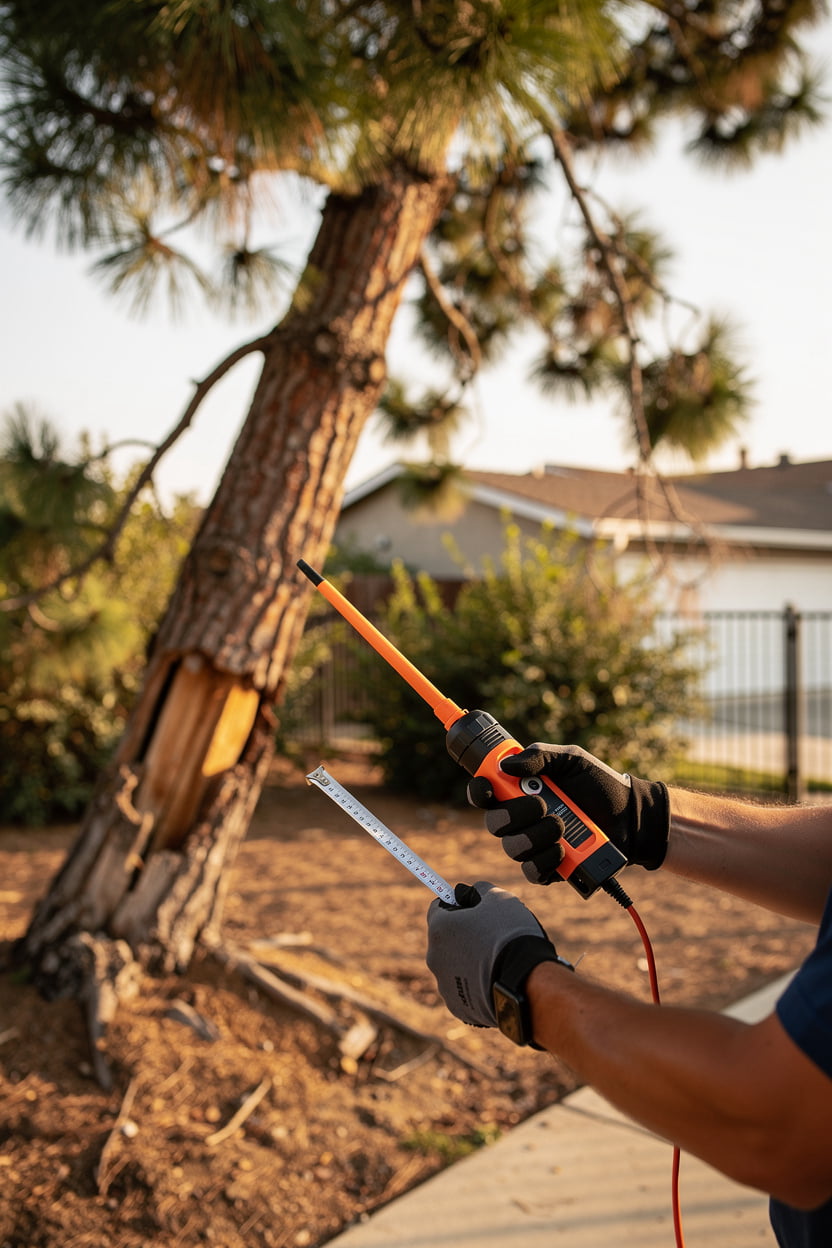
Signs a Tree Is a Hazard
Most hazardous trees give warning long before they fail. Watch for the changes below, and if you see more than one, call us for a free estimate before the tree comes down on its own. Keep people and pets well clear of any tree that looks visibly unstable.
- A lean that is getting worse If the trunk leans more than it did last season, or the soil at its base is cracking or heaving, the root system may be failing.
- Cracks, cavities or fungus at the base Open cavities, split bark, or mushroom-like growth on the trunk or roots point to internal decay that you cannot see from the outside.
- Large dead limbs over occupied areas Dead wood hangs longer than you expect. Limbs over a roof, driveway, play area or walkway deserve attention first.
- Lifting or exposed roots Roots that pull out of the ground or show new gaps around the trunk mean the anchor is weakening, especially after heavy rain.
- Storm damage that changed its stance A tree that was pushed, split or partly uprooted in a storm may look fine at a glance but still be unstable. Get it checked before the next wind.
How We Handle a Hazard Tree, Step by Step
A hazard tree is not a job to rush. Before anything is cut, our crew looks at the tree, what sits under it, and how we can get in and out safely. Here is the sequence we follow on every hazard removal in San Andreas.
-
1
Assessment
We inspect the trunk, root zone, and canopy for lean, cracks, cavities, and dead limbs, and note everything the tree could strike if it fails.
-
2
Planning Around Structures and Access
We map the drop zone, plan equipment access, and set protection for your house, fences, driveways, and utility lines before the first cut.
-
3
Controlled Removal
The tree comes down in sections, lowered under control, so limbs and trunk pieces land where we planned rather than where gravity takes them.
-
4
Debris Cleanup
We clear branches, logs, and sawdust from the work area and leave the site clean. Stump grinding can be added if you want it. Questions about a tree near your home? See how we work around houses and fences.
Hazard Tree Questions, Answered
If a tree on your property looks like it could fail, the first step is simple: keep people, pets and vehicles clear of it, then call us for an assessment. Here are the questions we hear most often from San Andreas property owners.
What should I do if a tree looks like it is failing?
Keep yourself, family members, pets and parked vehicles well away from the tree and any area it could reach if it fell. Do not attempt to cut, push or brace it yourself. Once the area is clear, call Three Pines Tree Service LLC at (209) 335-6655 for an on-site assessment.
How much does hazard tree removal cost in San Andreas?
Price depends on the tree's size, how close it sits to structures or fences, access for equipment, the species, and how much cleanup is involved. We cannot quote a fixed price without seeing the tree, so we offer a free estimate after an on-site review. For general context on tree removal costs, see our tree removal page.
Do I need to remove a dead tree that has not fallen yet?
Often, yes. A dead tree can drop limbs or fall without warning, especially after wind or heavy rain, and that risk grows the closer it stands to a home, driveway or walkway. Have it assessed so you know whether it can stay, needs pruning or should come down before it causes damage.
Is it safe to remove a tree leaning on my house?
It can be, but only with a careful plan built around your roof, fences and access points. We review the site before any cutting begins and explain how the work will be controlled. Please do not attempt to remove a leaning tree yourself. Our trees near structures page covers how we handle tight sites.
Call (209) 335-6655. Estimates are free.